We tested or gathered verified specification data for 12 LiDAR sensors commonly used in AGV and AMR applications. The table below covers the full range — from sub-$100 hobbyist units to industrial 3D scanners at $4,000+. Every spec is sourced from the manufacturer's latest datasheet. Where we have hands-on test data, we note it.
This isn't a "best overall" ranking. The right LiDAR depends on your robot's size, speed, environment, budget, and perception stack. For a deeper selection methodology, see our AGV LiDAR Selection Framework.
Quick Comparison Table
| Sensor | Type | H. FOV | V. FOV | Range (90%) | Range (10%) | Blind Zone | Accuracy | Points/sec | Weight | Est. Price | IP |
|---|---|---|---|---|---|---|---|---|---|---|---|
| SICK TiM781S | 2D | 270° | — | 0.05–25m | — | 0.05m | ±15mm | ~66k | 250g | ~$4,000 | IP67 |
| SICK nanoScan3 | 2D (safety) | 275° | — | 0.05–9m | — | 0.05m | ±15mm | ~50k | 300g | ~$3,500 | IP67 |
| Hokuyo UST-20LX | 2D | 270° | — | 0.06–20m | 0.06–8m | 0.06m | ±40mm | 44k | 130g | ~$2,500 | IP64 |
| Hokuyo UST-10LX | 2D | 270° | — | 0.06–10m | 0.06–4m | 0.06m | ±40mm | 44k | 130g | ~$1,200 | IP64 |
| SLAMTEC RPLIDAR A3 | 2D | 360° | — | 0.15–25m | — | 0.15m | ±2mm | 16k | 170g | ~$300 | IP20 |
| Livox Mid-360 | 3D | 360° | -7°~52° (59°) | 0.1–40m | 40m | 0.1m | ≤2cm | 200k | 265g | ~$749 | IP67* |
| RoboSense Airy | 3D | 360° | Hemispherical | 0.1–60m | 30m | — | ±1cm | 860k | <240g | ~$800–1,200 | IP6X |
| Hesai XT16 | 3D (mech.) | 360° | 30° | 0.05–120m | ~40m | 0.05m | ±1cm | 320k | ~820g | ~$1,500 | IP65 |
| Hesai JT128 | 3D | 360° | 190° | 0.05–60m | 40m | 0.05m | ±1cm | 1.15M | ~420g | ~$2,000 | IP6K9K |
| Ouster OS0-32 | 3D | 360° | 90° | 0.3–100m | 35m | 0.3m | ±0.8cm | 300k | 453g | ~$4,000 | IP68/IP69K |
| Ouster OS1-32 | 3D | 360° | 42.4° | 0.5–120m | 90m | 0.5m | ±0.5cm | 660k | 418g | ~$6,000 | IP68/IP69K |
| SmartBotParts M360 | 3D | 360° | -10°~60° (70°) | 0.05–50m | 0.05–25m | 0.05m | ≤2cm@10m | 200k | 408g | [TBD] | IP67 |
* Livox Mid-360 base is IP67; Mid-360S confirmed IP67. Check the specific variant.
Prices are approximate street/unit pricing for small quantities (1–10 units). Volume pricing can be significantly lower. Contact manufacturers for quotes.
2D LiDAR Sensors
SICK TiM781S
SICK's TiM series has been the default navigation sensor for European warehouse AGVs for years. The TiM781S uses HDDM+ (High Definition Distance Measurement Plus) technology and covers 270° at up to 25m. Its IP67 housing handles dust, rain, and temperature swings — something that matters if your AGVs work in cold-chain logistics or semi-outdoor environments.
At ~$4,000, it's expensive per unit, but the reliability track record is hard to argue with. SICK sensors routinely run for 50,000+ hours in the field without replacement. For a fleet of 200 AGVs where a sensor failure means pulling a vehicle offline and disrupting operations, that uptime matters more than the per-unit price.
Best for: Industrial AGVs in harsh environments, applications with safety certification requirements, fleets where downtime cost >> sensor cost.
Weakness: 270° FOV means you get a dead zone behind the sensor. Many AGVs mount two units for 360° coverage, which doubles your sensor cost. Single-plane data only — no 3D obstacle detection.
SICK nanoScan3
The nanoScan3 is SICK's smallest safety laser scanner, with an 80mm height that fits on low-profile AGVs where the TiM781S won't. Its 9m protective field range is shorter, but it's designed first as a safety scanner (IEC 61496 Type 3 compliance), with navigation as a secondary function.
This matters because in some jurisdictions, AGVs operating alongside workers legally require a certified safety scanner. The nanoScan3 can serve both roles, eliminating the need for a separate safety sensor. That dual-function value is the main selling point.
Best for: Small AGVs/AMCs, applications with safety certification requirements, low-profile vehicles.
Weakness: 9m range is limiting for large warehouse bays. Not ideal as a primary navigation sensor for open-warehouse SLAM.
Hokuyo UST-20LX
Hokuyo's UST-20LX hits the middle ground between SICK's industrial pricing and budget options. At 130g it's very light, uses 100BASE-TX Ethernet, and scans at 40Hz. The 20m range and 270° FOV are standard for the 2D LiDAR category.
A caveat: Hokuyo's accuracy spec is ±40mm (vs. SICK's ±15mm). For AGV navigation this is usually fine — you don't need sub-centimeter precision for wall-following SLAM. But if you're doing high-precision docking, the error margin can add up.
Best for: Mid-range budget-conscious AGVs, indoor environments, developers wanting a straightforward 2D solution.
Weakness: IP64 only (not dust-tight like IP67). 270° FOV. Accuracy spec is looser than SICK.
Hokuyo UST-10LX
Same form factor as the UST-20LX but with a 10m range cap, at roughly half the price (~$1,200). If your AGVs operate in environments where nothing useful is beyond 10m — narrow warehouse aisles, small workshops, indoor retail — the UST-10LX gives you Hokuyo reliability at an accessible price point.
You see the UST-10LX a lot in research labs and educational robotics setups, partly because Hokuyo has an established presence in academia. For production AGV fleets, most teams step up to the UST-20LX for the extra range.
Best for: Small indoor environments, educational/research robotics, budget-limited projects.
Weakness: 10m range limits open-area navigation. IP64.
SLAMTEC RPLIDAR A3
The RPLIDAR A3 is the budget option, at ~$300. It covers 360° (no dead zone) and reaches 25m. At 16k points per second, the point density is thin compared to SICK or Hokuyo, and IP20 means it can't handle dust or moisture. But for the price, it's hard to beat.
SLAMTEC has improved their SDK support significantly over the past two years, with native ROS2 drivers and decent documentation. The RPLIDAR C1 (their newer budget model) is even cheaper but drops to 12m range. For prototyping or small-batch robots where the environment is controlled, the A3 is a reasonable starting point.
Best for: Prototyping, small-batch robots, indoor clean environments, teams on tight budgets.
Weakness: IP20 (indoor-only), low point density, limited durability at scale. Not suitable for 24/7 industrial operation.
3D LiDAR Sensors
Livox Mid-360
The Livox Mid-360 has become the de facto budget 3D LiDAR for mobile robots since its launch in 2024. At $749 with 360° × 59° FOV, 200k points/sec, and 265g weight, it offers a lot per dollar. Its non-repetitive scanning pattern covers the FOV over time — the key tradeoff is that at any single moment, not every angular position is being scanned.
For AMR SLAM and general obstacle avoidance, this works well. For high-speed scenarios where a robot needs to detect a forklift crossing its path in a single frame, the non-repetitive pattern means some edge cases require a few extra milliseconds of data to resolve. Most warehouse AMRs move at 1–2 m/s, so this is rarely a practical problem.
The IP67 rating on the Mid-360S variant makes it viable for semi-outdoor use. ROS2 support is mature, with an official Livox driver and extensive community resources. For more alternatives, see our 7 alternatives to Livox Mid-360.
Best for: Indoor AMRs needing 3D perception on a budget, service robots, delivery robots in structured environments.
Weakness: Non-repetitive scan pattern adds latency for edge-case detections. 40m at 10% reflectivity is adequate but not exceptional for outdoor use.
RoboSense Airy
RoboSense's Airy is a hemispherical digital LiDAR with 192 beams, 860k points/sec, and a 60mm × 63mm form factor that weighs under 240g. The hemispherical FOV is the standout feature — it sees above and behind the sensor in a single unit, which means no mounting angle compromises.
At ~$800–1,200 depending on volume, the Airy sits near the Mid-360 in price but offers higher point density and a wider vertical FOV. RoboSense shipped 185,500 robot LiDAR units in Q1 2026, and the Airy is a significant portion of that volume. Pudu Robotics uses it in their scrubber-dryer robots, where the hemispherical view helps detect table legs and chairs from a low mounting position.
For more context on RoboSense's market growth, see our RoboSense Q1 2026 shipment analysis.
Best for: Low-mount robots needing overhead detection, cleaning robots, applications benefiting from hemispherical coverage.
Weakness: Newer to market than the Mid-360, so less community validation. Point cloud format may require adjustment in some SLAM pipelines.
Hesai XT16
The Hesai XT16 is a 16-channel mechanical spinning LiDAR with 360° × 30° FOV and a 120m maximum range (40m at 10% reflectivity). It generates 320k points/sec and has a 0.05m minimum range — useful for near-field detection that some 3D LiDARs struggle with.
The 30° vertical FOV is narrower than the M360 (70°) or Mid-360 (59°), which means it sees less above and below the horizon plane. For an AGV mounted at 2–3m height, that 30° window may not cover the floor close to the robot — a common concern for detecting low obstacles like pallet overhangs or floor cables.
At ~$1,500 and ~820g, the XT16 is heavier and pricier than the Mid-360 but offers more range and higher point density. The mechanical spinning design has moving parts that wear over time — the rated lifetime is typically 2–3 years at continuous operation.
Best for: Outdoor AGVs needing longer range, robots that can handle the extra weight and mechanical complexity.
Weakness: Narrow vertical FOV (30°), heavier, mechanical spinning (wear over time).
Hesai JT128
The JT128 is Hesai's hyper-hemispherical offering — 360° × 190° FOV, which is the largest vertical coverage we've seen in this class. It uses fully solid-state electronic scanning, so no spinning mechanical parts. At ~420g and ~$2,000, it's positioned as a premium indoor/outdoor robotics sensor.
The 60m range and 40m at 10% reflectivity are competitive. The IP6K9K rating handles pressure washing, which is relevant for food-processing and pharmaceutical AGVs. Point rate is high at 1.15M points/sec (dual return).
Best for: Applications requiring extreme vertical FOV coverage, environments with pressure-wash cleaning requirements, robots that need to see ceiling-to-floor in a single sensor.
Weakness: At $2,000, it's the priciest mid-range option. Newer to the AGV market than established players.
Ouster OS0-32
Ouster's OS0-32 is the short-range option in their digital LiDAR lineup, with a 90° vertical FOV and 100m max range (35m at 10% reflectivity). It uses Ouster's L3 chip architecture with digital signal processing, producing uniform point clouds across 32 channels.
The OS0-32's 90° vertical FOV exceeds the Hesai XT16's 30° and the M360's 70°. For AGVs that need ceiling-to-floor coverage from a single sensor, the OS0-32 delivers. At ~$4,000, it's in the premium range, and Ouster's strong ROS support and SDK maturity make integration straightforward.
The IP68/IP69K rating is best-in-class, handling full submersion and high-pressure washdown. If you operate AGVs in food processing, pharmaceutical manufacturing, or outdoor environments with extreme weather, this matters.
Best for: Premium AGVs requiring wide vertical FOV and extreme environmental protection, fleets where integration quality and support matter.
Weakness: $4,000 is expensive for most warehouse AGV applications. 35m at 10% reflectivity is shorter than some cheaper options.
Ouster OS1-32
The OS1-32 trades the OS0's ultra-wide FOV for longer range: 90m at 10% reflectivity (vs. 35m) and 200m max range. The vertical FOV drops to 42.4°. At ~$6,000, it's the most expensive sensor in this comparison.
For warehouse AGVs, the OS1-32 is generally overkill. The range advantage is irrelevant in a 50m warehouse aisle, and you're paying for capabilities designed for outdoor autonomy and mapping applications. Where the OS1-32 makes sense is on outdoor AGVs, port logistics vehicles, or robots operating in large open areas where 90m detection range at 10% reflectivity provides actual value.
Best for: Outdoor AGVs, large-area autonomous vehicles, applications where long-range 3D perception is a hard requirement.
Weakness: Price. Over-specified for typical indoor warehouse AGV use.
SmartBotParts M360 / M360-D
The M360 is a 3D LiDAR designed specifically for AGV and AMR applications. It covers 360° × 70° with a 5cm blind zone — the smallest blind zone in this comparison, which matters for close-proximity maneuvering in tight warehouse aisles.
The 0.05–25m range at 10% reflectivity is matched by few competitors in the same weight class (408g). The M360-D variant adds dual-return capability for better performance in dusty or rainy conditions — useful for cold-chain logistics where condensation is common.
Other notable specs: built-in IMU (3-axis accelerometer + 3-axis gyroscope) for sensor-fusion SLAM, IEEE 1588 PTP v2 time synchronization for multi-sensor setups, <4.5W power draw, and IP67. The ≤2cm accuracy at 10m and ≤3cm at 0.2m (1σ) is competitive with the Mid-360 and Airy.
At 200k points/sec, the point rate matches the Mid-360. The M360's advantage is in the vertical FOV (70° vs. 59°), blind zone (5cm vs. 10cm), and built-in IMU — features that add up for close-quarters AMR operation. For detailed specs, see the M360 parameter comparison page.
Best for: Warehouse AMRs that operate in tight aisles and need near-field precision, fleets using sensor fusion, applications where a 5cm blind zone is a differentiator.
Weakness: Newer entrant with less field history than SICK or Hokuyo. Pricing not yet publicly listed — contact required.
What to Consider Beyond Specs
Datasheets don't tell the whole story. After testing or deploying these sensors (or gathering reports from teams that have), here are the less obvious factors:
ROS2 driver quality. Some sensors have official, well-maintained ROS2 drivers (Ouster, Livox, SICK). Others rely on community-maintained packages that may lag behind ROS2 releases. Check the driver repo's commit history and issue tracker before committing to a sensor.
Point cloud format compatibility. Most sensors output standard point cloud formats, but some (RoboSense Airy, Livox) use proprietary point cloud structures that need conversion. This adds complexity to your SLAM pipeline if you're mixing sensors from different vendors.
Multi-sensor interference. In warehouses with 20+ AGVs, LiDAR interference from adjacent robots is a real problem. SICK's HDDM+ technology handles this well. Some newer 3D sensors have anti-interference algorithms, but testing in your actual deployment density is the only way to know. See our multi-device interference analysis.
Lead time and availability. Ouster has had supply chain issues in the past. SICK and Hokuyo have established European distribution but can be slow to ship from Asia. Livox is generally available but popular models sometimes have 4–6 week lead times at peak demand. Factor this into your timeline.
Power consumption. Most AGV LiDARs draw 3–10W — not a lot individually. But on a small AMR with limited battery capacity, every watt matters. The M360 (<4.5W), Mid-360 (~6W), and RPLIDAR A3 (~3W) are the lightest power draw options. For fleet-level analysis, see our LiDAR TCO cost analysis.
Warranty and support. SICK offers 2-year warranties standard. Ouster and Livox typically offer 1 year. For lower-cost options like the RPLIDAR, support may be community-only. For a fleet of 100 AGVs, support quality is worth paying for.
Choosing the Right Sensor
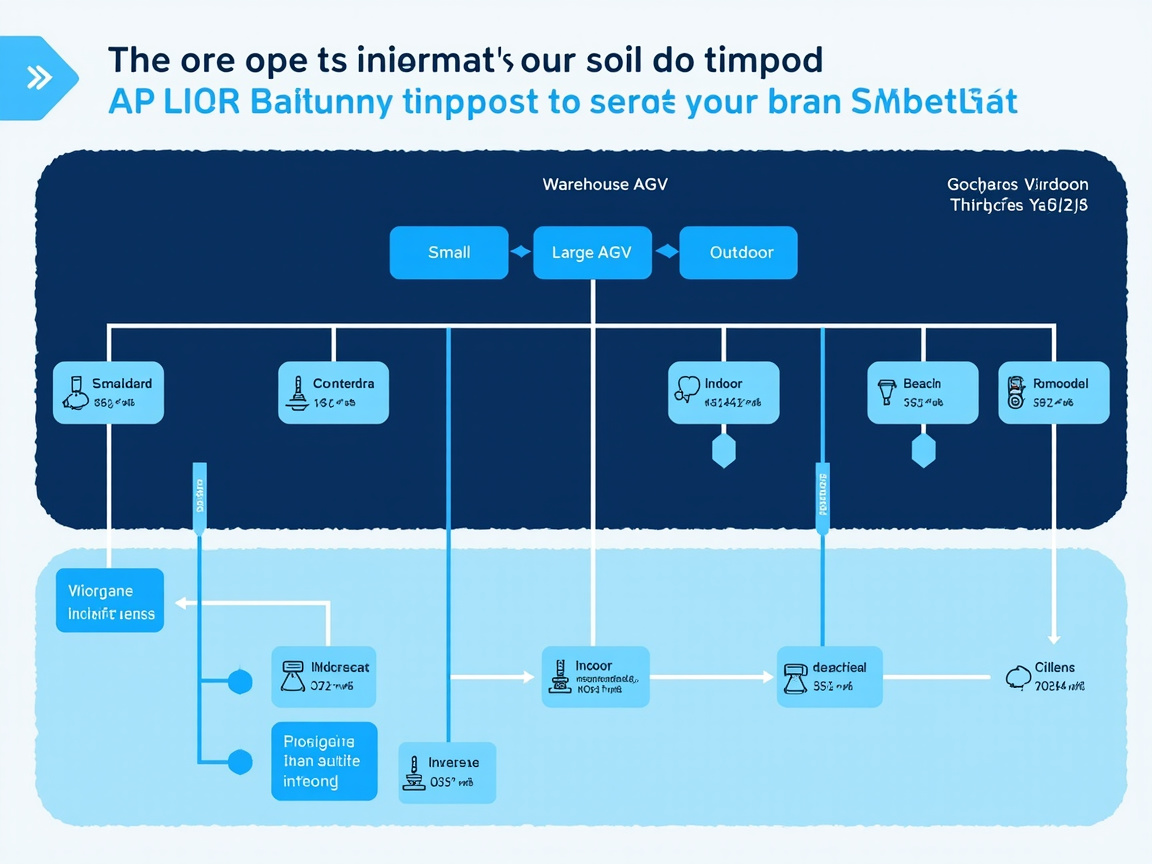
Here's a simplified decision framework based on common AGV use cases:
Small indoor warehouse AGVs (under 50kg, 1–1.5 m/s):
- Budget: RPLIDAR A3 (2D) or Livox Mid-360 (3D)
- Mid-range: Hokuyo UST-20LX (2D) or M360 (3D)
- Premium: SICK TiM781S (2D) or Ouster OS0-32 (3D)
Large warehouse AGVs / AMRs (100kg+, 2 m/s+):
- Need 3D: M360, Livox Mid-360, or RoboSense Airy
- Safety certification needed: SICK nanoScan3 + additional navigation sensor
- Outdoor capability: Hesai XT16 or Ouster OS0-32
Delivery robots (semi-outdoor):
- Budget 3D: Livox Mid-360S or RoboSense Airy
- Better range: Hesai XT16 or M360-D
Cleaning robots:
- Low mount, need overhead view: RoboSense Airy or Hesai JT128
- Standard indoor: Livox Mid-360 or M360
Cold-chain / washdown environments:
- Must have: IP67+ rating, dual-return helpful for condensation
- Options: M360-D, Ouster OS0-32, Hesai JT128, SICK TiM781S
Spec Verification
All data in this comparison is based on the following manufacturer sources current as of this writing. We recommend downloading the latest datasheets before making procurement decisions:
- SICK: TiM781S datasheet (TIM781S-2174104), nanoScan3 product information
- Hokuyo: UST-10LX/UST-20LX specifications sheet
- SLAMTEC: RPLIDAR A3M1 datasheet v1.0
- Livox: Mid-360 / Mid-360S official specifications page
- RoboSense: Airy product page and RoboSense wiki
- Hesai: XT16/32/32M specifications page, JT128 datasheet
- Ouster: OS0 and OS1 datasheets (Rev 7)
- SmartBotParts: M360(-D) User Manual Ver 1.4 (2026-02-27)
Prices are approximate and based on publicly listed pricing or distributor quotes for 1–10 unit quantities. Actual pricing varies by region, volume, and distribution channel.
This comparison was compiled from manufacturer datasheets and published test data. We did not receive compensation from any sensor manufacturer. Specs may have changed since publication — always verify against the latest datasheet before purchasing. If you spot an error, let us know.
Frequently Asked Questions
What is the best LiDAR sensor for warehouse AGVs?
For small indoor warehouse AGVs under 50kg at 1–1.5 m/s: budget options include RPLIDAR A3 (2D) or Livox Mid-360 (3D); mid-range choices are Hokuyo UST-20LX (2D) or SmartBotParts M360 (3D); premium picks are SICK TiM781S (2D) or Ouster OS0-32 (3D). The right sensor depends on environment complexity, budget, and required safety certifications.
What is the cheapest 3D LiDAR suitable for AGVs?
The Livox Mid-360 at approximately $749 is the most affordable 3D LiDAR with specs suitable for AGV use. It offers 360° × 59° FOV, 200k points/sec, IP67 protection, and weighs 265g. For tighter budgets, the RoboSense Airy at $800–1,200 provides hemispherical coverage with 860k points/sec.
Do I need 2D or 3D LiDAR for my AGV?
2D LiDAR works for simple fixed-path transport in clean environments with full-height obstacles. Upgrade to 3D when you face dynamic environments with obstacles at varying heights, mixed-traffic areas with pedestrians, or high-value payloads where collision accuracy matters. For a deeper analysis, see our 2D vs 3D LiDAR upgrade guide.
Which LiDAR has the smallest blind zone for AGVs?
The SmartBotParts M360 has the smallest blind zone in this comparison at 5cm, which is critical for close-proximity maneuvering in tight warehouse aisles. The SICK TiM781S and Hokuyo UST-20LX also have a 5cm blind zone. Most 3D LiDARs have 10cm blind zones, and some Ouster models have 30–50cm blind zones.
What IP rating do I need for warehouse AGV LiDAR?
IP64 is the minimum for most indoor warehouse environments (dust-protected, splash-proof). IP67 is recommended for cold storage, food processing washdown areas, and semi-outdoor operations — it adds temporary immersion protection. IP68/IP69K (Ouster OS0-32) is for extreme environments like pressure washing or full submersion.